
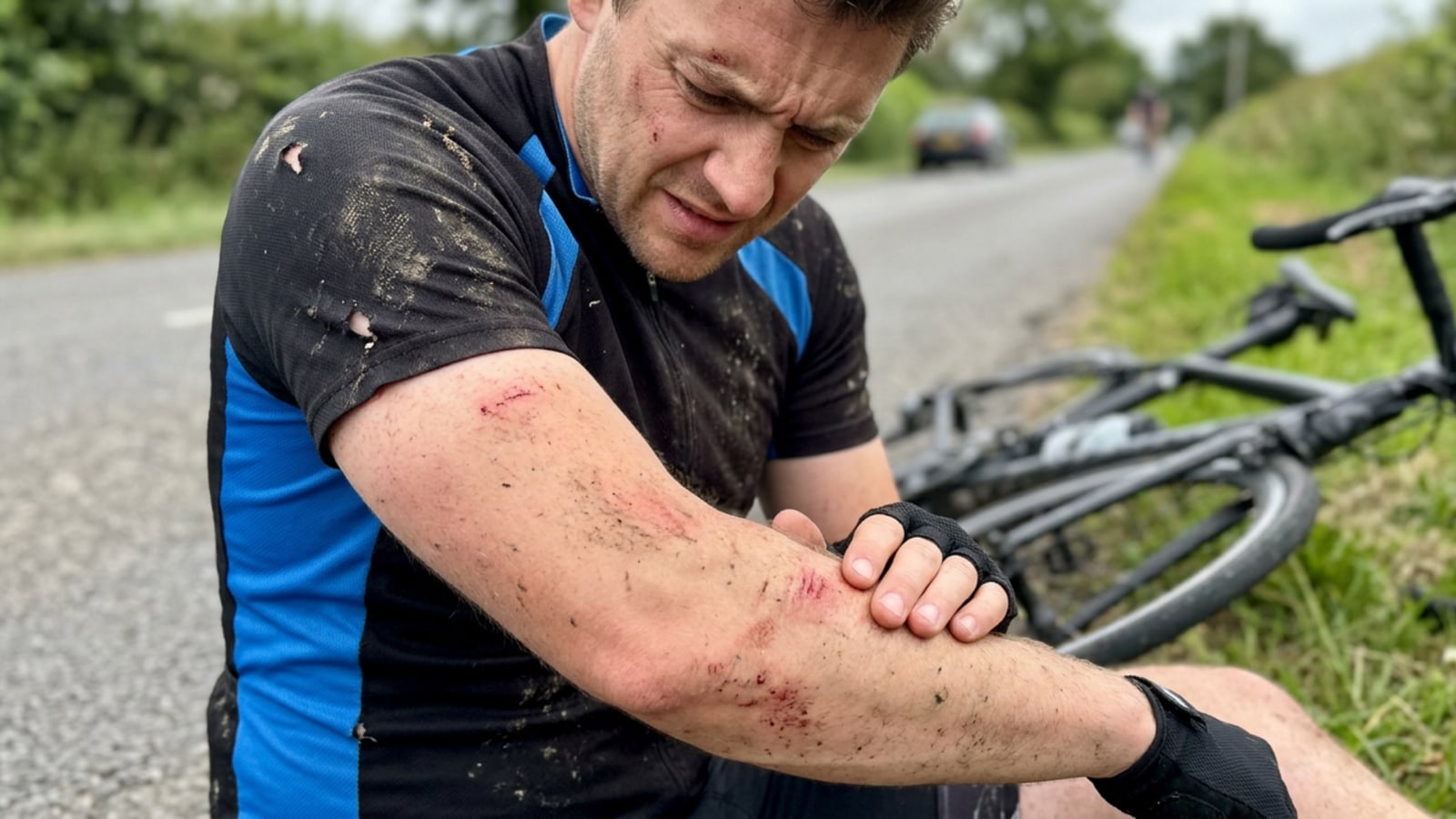
Cycling Injuries
Cyclists tend to push through pain that would stop most people, right up until the mileage they've built starts slipping away.
We see riders who've had a nagging knee or hip issue for months, tried to stretch and ice their way through it, and kept riding anyway because backing off felt like losing ground. Cycling puts repetitive, sustained load through a narrow range of motion, and small imbalances that wouldn't matter in daily life show up clearly at mile fifteen.
Why Cycling Injuries Get Misdiagnosed
The same complaint, knee pain on a ride, can come from a bike fit issue, a weak hip stabilizer, a restricted ankle, or a pedaling pattern that's overloading one side.
Treating the knee without testing the rest of the chain usually means treating a guess. We test first so treatment is aimed at what we actually find.
How We Evaluate It
We run strength testing on the hip, quad, and hamstring, which returns a percentile against your age group, range of motion testing at the hip, knee, and ankle, and video analysis of your pedaling or movement pattern where it's relevant.
You see the same numbers we see before we talk about treatment.
What Cycling Injuries Can Mean
Patellofemoral pain, IT band irritation, hip flexor strain, low back pain from sustained forward posture, and overuse tendon issues in the knee or Achilles are common in cyclists. Some of these respond well to conservative treatment. Some need imaging or a referral, and we tell you plainly if that's the case.
How We Treat It
Once we know what we're treating, your plan can include manual therapy such as joint mobilization or Graston, therapeutic exercise targeted at the specific weakness or restriction we found, and a home program you do between visits. We re-measure your strength and movement against your original numbers as you progress, with the goal of getting you back on the bike at the mileage you actually want.
Frequently Asked Questions
- Is my pain from my bike fit or from my body?
Often both play a role, but testing tells us specifically what your body is doing differently, rather than guessing based on the bike alone.
- How long does a cycling injury take to resolve?
That depends on what the evaluation finds. You leave your first visit with a plan of care that includes an expected duration, so you're not guessing.
- Do I need to stop riding while I recover?
Not always. Your plan is built around getting you back to riding, and we tell you directly what needs to change in the meantime.

Know What's Wrong and What's Next
No guessing, no generic exercise sheet. Just a measured answer and a plan with your name on it.