
Kinesio Taping
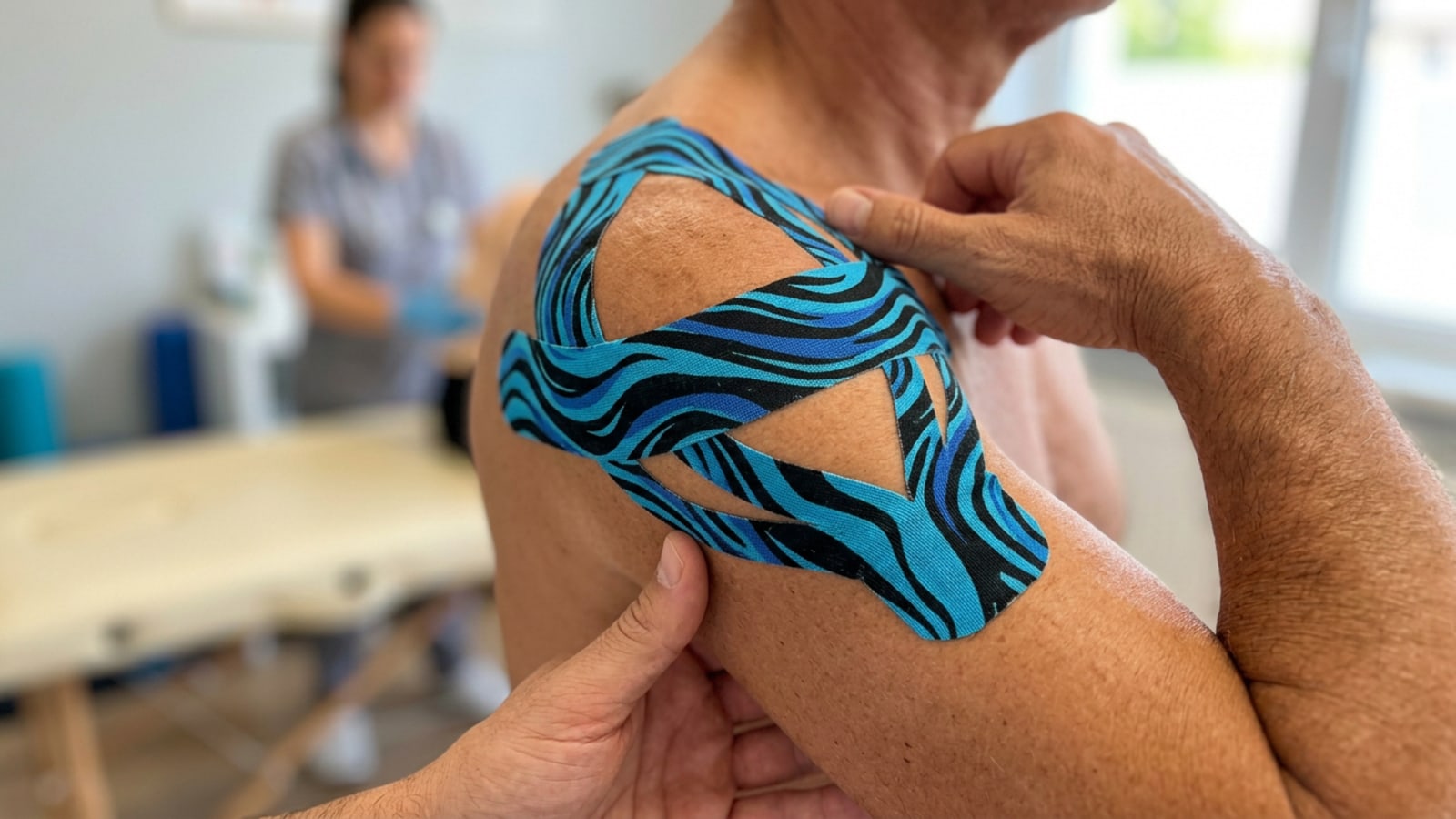
Kinesio taping is an elastic tape applied to the skin over a muscle or joint to support movement and reduce swelling while you continue to use the area normally.
Kinesio taping is a supportive technique we add to a plan of care once testing shows where support is needed, not a treatment we apply without knowing what's actually happening in the tissue.
What It Is
The tape is thin, elastic, and applied directly to the skin over a specific muscle or joint. Unlike a rigid brace, it stretches with your body, so it supports movement instead of restricting it.
It can be applied to reduce swelling by gently lifting the skin, to support a muscle that's been overworked or injured, or to cue better movement patterns during activity.
What to Expect
The tape is applied directly over clean skin, usually in strips that follow the direction of the muscle or the pattern of movement we're trying to support. It typically stays on for three to five days, including through showers and light activity, and it shouldn't restrict your range of motion.
Some patients feel a mild pulling sensation on the skin, especially when the area is moved through its full range. If it starts to peel or irritates the skin, we'll adjust the application at your next visit.
What We Use It For
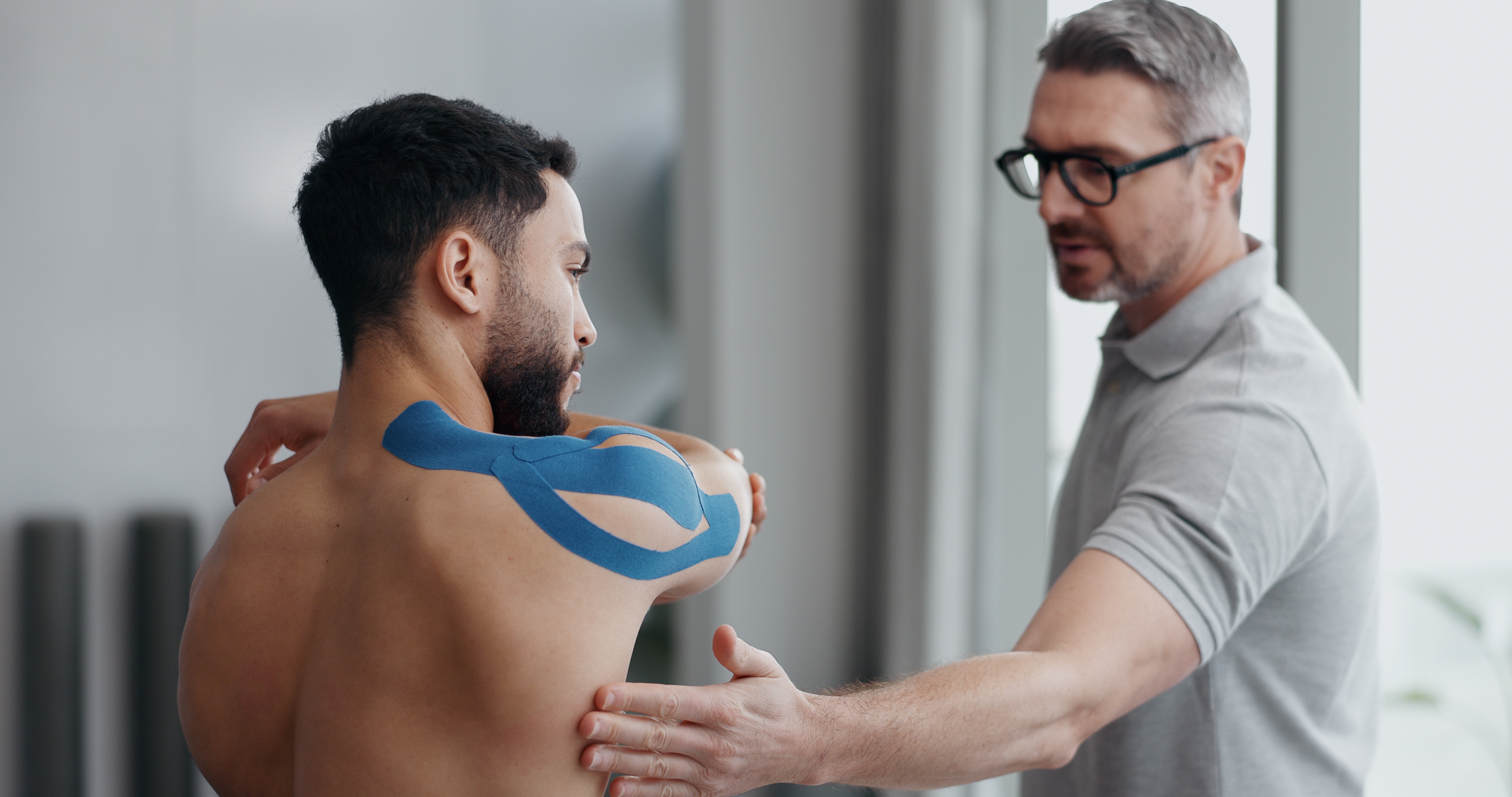
Kinesio taping supports muscles and joints during the active phase of recovery, particularly for shoulder impingement, knee pain, low back pain, and cases where swelling needs to be managed alongside other treatment.
How It Fits Into Your Plan of Care
Kinesio taping is chosen the same way every treatment here is chosen, based on what your evaluation finds. It's paired with manual therapy, therapeutic exercise, and a home program, and it's adjusted or discontinued as your numbers change.

Know What's Wrong and What's Next
No guessing, no generic exercise sheet. Just a measured answer and a plan with your name on it.